

How Physical Therapy Helps Skiing Related Injuries
Skiing demands strength, endurance, balance, and quick decision making. Whether you ski downhill at a resort, climb on alpine touring routes, or glide across trails on cross-country skis, the body absorbs repeated stress in cold and unpredictable conditions. Skiing injuries often happen when fatigue sets in or control slips for just a moment. Physical therapy plays a key role in helping skiers recover properly and prevent future injuries before the next season or next tour.
Our Patients Get Great Results
“Alex from Breckenridge Physical Therapy is very professional and thorough with his treatment and adapting his program to his patients needs. He listens to what your feedback is and takes that information and applies it to make the patient feel good about their progress and to keep positive and moving forward in working hard through their rehabilitation. I would highly recommend Alex and Breckenridge Physical Therapy to anyone seeking highly professional treatment.” – Scott
Why Different Ski Disciplines Stress the Body in Unique Ways
Not all skiing injuries happen the same way. Each discipline places specific demands on the body.
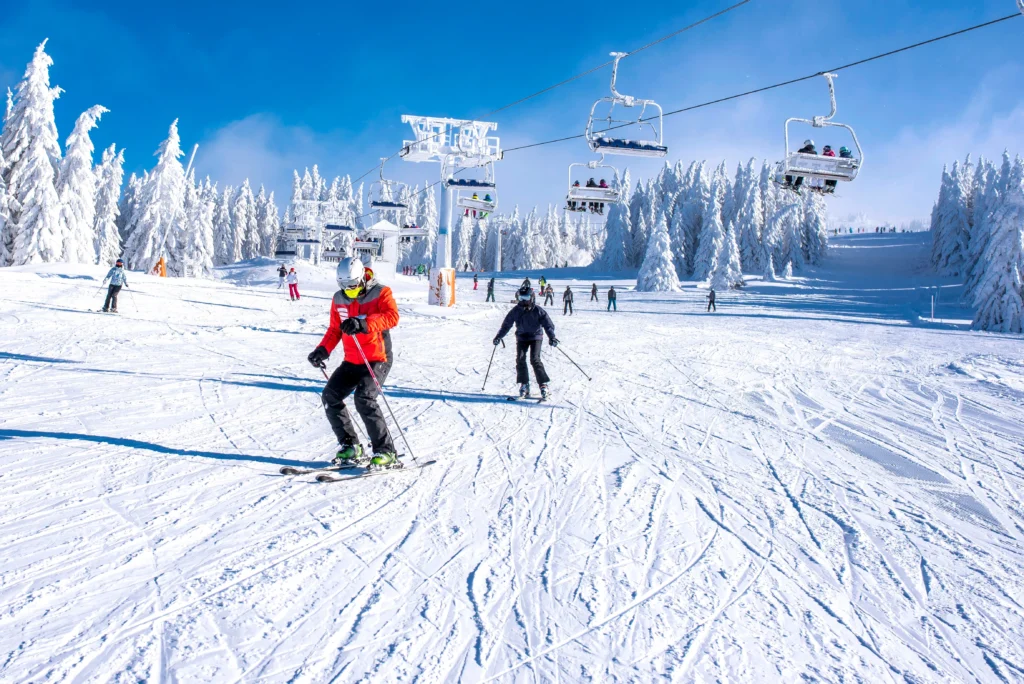
Downhill skiing challenges joint stability during high speed turns and sudden stops. Alpine touring adds long uphill climbs that tax the hips, calves, and lower back before technical descents even begin. Cross-country skiing emphasizes repetitive motion, endurance, and coordination, which can overload shoulders, hips, and knees over time.
Understanding how these demands affect the body helps guide effective recovery.
Injury Patterns Seen in Downhill Skiers
Resort skiing injuries often occur during falls, awkward landings, or rapid direction changes. The fixed boot and binding system increases stress on the knees and lower body.
Common downhill skiing injuries include:
- Knee ligament strain or joint irritation
- Ankle stiffness and instability
- Hip and groin strain
- Lower back pain from repeated loading
- Shoulder injuries from falls
These injuries often affect how the body moves as a whole, not just the painful area.
Common Issues in Alpine Touring Skiers
Alpine touring combines endurance and technical skill. Long climbs place repetitive stress on the calves, Achilles tendon, hips, and lower back. Fatigue during the ascent increases injury risk during the descent.
Frequent alpine touring injuries include:
- Achilles and calf strain
- Hip flexor and glute overuse
- Knee irritation from repetitive climbing motion
- Lower back discomfort from prolonged uphill posture
Without proper recovery, these issues can carry into the downhill portion of the sport.
Cross Country Skiing Injuries That Develop Over Time
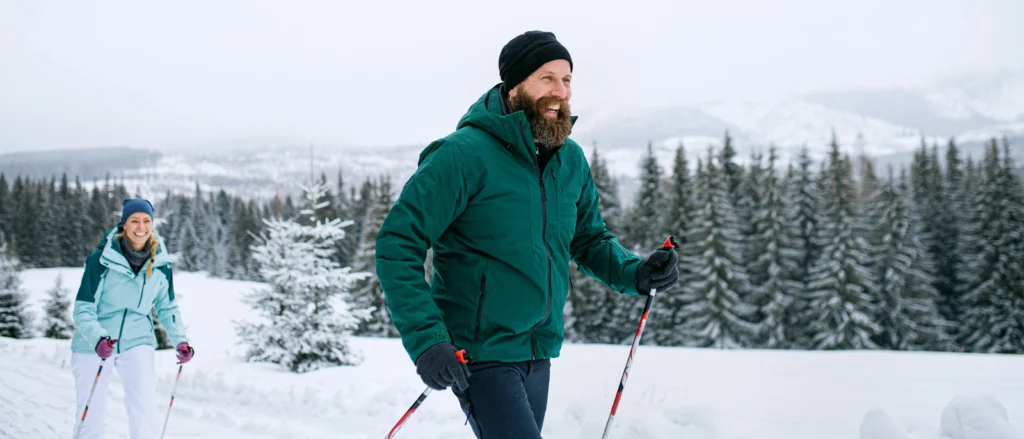
Cross-country skiing relies on rhythm, repetition, and endurance. Because movement patterns repeat thousands of times, injuries often build gradually rather than from a single event.
Common cross-country skiing injuries include:
- Shoulder and upper back strain
- Hip and knee overuse injuries
- Lower back fatigue
- Ankle and foot soreness from long distances
These injuries often appear subtle at first and worsen when ignored.
How Skiing Injuries Affect Movement Beyond the Slopes
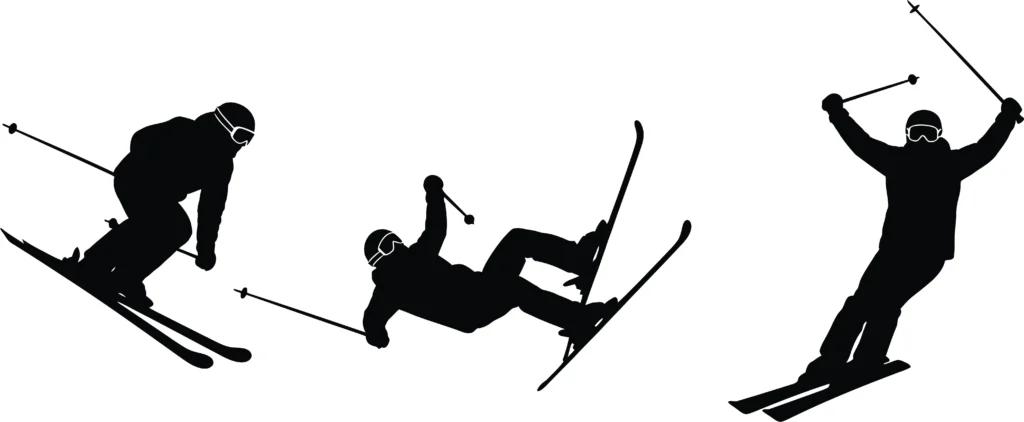
After an injury, the body compensates quickly. Weight shifts, stride changes, and reduced joint motion help avoid discomfort short term. These changes often linger long after pain improves. Compensations increase stress on other joints and muscles. Without correction, skiers may feel unstable, weaker, or hesitant even after returning to activity.
What Physical Therapy Focuses on After Skiing Injuries
Physical therapy addresses more than isolated pain. Our physical therapists evaluate how strength, mobility, balance, and coordination work together.
Treatment often focuses on:
- Restoring joint motion affected by stiffness or swelling
- Rebuilding strength needed for turning, climbing, and stability
- Improving balance and reaction time
- Correcting movement patterns altered by injury
This approach supports safer movement both on and off skis.
Preparing the Body for a Safe Return to Skiing
Returning to skiing requires confidence and control. Physical therapy helps rebuild tolerance for the demands of each discipline.
- For downhill skiers, care emphasizes knee control, lower body strength, and balance.
- For alpine touring skiers, therapy supports climbing endurance, hip strength, and downhill stability.
- For cross-country skiers, treatment improves movement efficiency and endurance to reduce overuse strain.
Progression is guided so the body adapts without overload.
Preventing Future Skiing Injuries Before They Start
Many skiing injuries stem from strength imbalances, limited mobility, or poor movement efficiency. Addressing these factors reduces reinjury risk.
Physical therapy helps skiers:
- Improve joint stability
- Increase muscle endurance
- Enhance balance on uneven terrain
- Move more efficiently under fatigue
Prevention focused care keeps skiers active longer and more confidently.
Exercise Of The Month
Median Nerve Glide
Stand tall with your arm extended in front of you at shoulder height, palm facing up. Use your opposite hand to gently grasp your thumb. Slowly extend your wrist and fingers back. Return to the starting position with control. Perform the motion gently and smoothly.
3 Sets, 10 Reps (each arm).
Take the Next Step Toward Stronger, Safer Skiing
Skiing injuries do not have to define your season or your future on the snow. Proper recovery and prevention help skiers return stronger and more confident. If skiing injuries are limiting your performance or enjoyment, contact Breckenridge Physical Therapy to learn how our physical therapists can help you recover, prevent future injury, and keep you moving on the slopes and trails.
Meet Our Team

Dr. Alexander Kuck
PT, DPT, C-PS

Dr. Ellie Allan
PT, DPT, C-PS

Dr. Justin Welch
PT, DPT, C-PS

Tips for A Heart-Healthy Valentine’s Day!
This year, don’t forget the most important Valentine of all: your heart! With February being the month of love and American Heart Month, here are a few tips to combine them into one fabulous celebration:
- Try a heart-healthy treat: Pomegranate seeds, good dark chocolate, and sweet strawberries are all delicious alternatives to candy hearts.
- Take a ballroom dance class with your sweetheart: Nothing’s more romantic than a sweeping waltz or sultry tango. But ballroom dancing is also a great cardio workout–making it the perfect date night for American Heart Month!
- Sink into a relaxing bubble bath: Stress contributes to cardiovascular disease, so this month, set aside time to rest and relax with a bubble bath. Dim the lights, burn a few candles, and settle down with your favorite romantic read.
Want more healthy heart tips this February–or any month of the year? Schedule an appointment with Breckenridge Physical Therapy today!
Recipe of the Month: Yogurt Covered Strawberries

Ingredients:
- 12 strawberries
- 10 ounces vanilla Greek yogurt
- pink food coloring

Instructions:
- Wash the strawberries and pat them dry. No moisture should remain on the berries before dipping them in the yogurt. Place a piece of parchment paper on a large plate or cutting board.
- Place the yogurt in a small bowl and holding onto the green leaves, dip each strawberry into the yogurt. Swirl it around to cover the berry, leaving a little red at the top. Place each yogurt dipped strawberry on the parchment paper. When you have dipped all the strawberries, place them in the freezer for 15 to 20 minutes.
- Dip the strawberries a second time in the yogurt. To get a gradient of pinks, dip 4 berries in the yogurt with no food coloring, then add a single drop of pink food coloring to the yogurt and stir it till combined. Dip four more berries in the yogurt. Then add another drop of food coloring to the yogurt and stir to combine. Dip the remaining four berries in the yogurt.
- Place the strawberries back in the freezer for 40 minutes to 1 hour. The frozen yogurt will begin melting when you remove the berries from the freezer, so only pull them out when you are ready to serve them.
Sources
- https://thishealthytable.com/blog/yogurt-covered-strawberries/
- https://bjsm.bmj.com/content/58/Suppl_2/A128.2
- https://www.nature.com/research-intelligence/nri-topic-summaries/injury-prevention-and-risk-factors-in-skiing-and-snowboarding-micro-20097
- https://www.sciencedirect.com/science/article/abs/pii/S0020138323004916