

How To Find Relief From Sciatica
January 2025 Newsletter
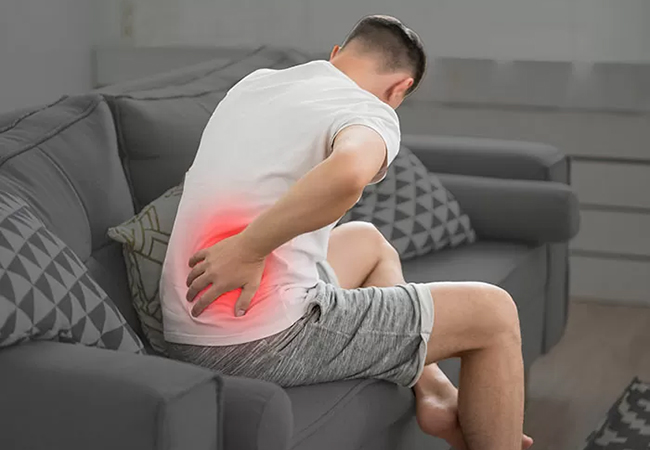
Frank’s pain was the worst he’d ever felt. It started in his lower back but then radiated down the back of his leg all the way to his toes. Sometimes, he felt numbness or tingling in his leg, which he found especially concerning. But worst of all, this radiating pain made it almost impossible for him to get around.
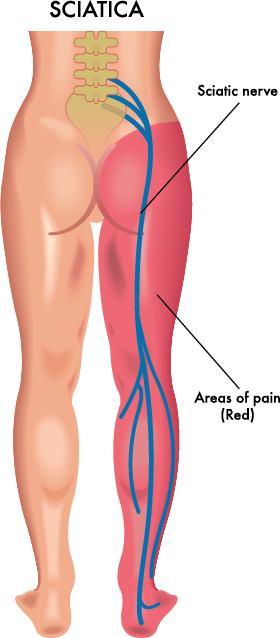
Eventually, Frank visited his physical therapist, where he learned this pain had a specific term: sciatica. Its name comes from the fact that it affects the sciatic nerve, which runs from the lower back down into the foot.
Frank also learned that his sciatica, like most people’s, came courtesy of a herniated disc in his lumbar spine. Fortunately, physical therapy is a frontline treatment for herniated discs, and with a month of regular PT sessions, Frank resolved his pain.
Are you experiencing radiating leg pain like Frank? If so, reach out to us at Breckenridge Physical Therapy. We can help you know for certain if your pain is sciatica or another similar condition — and we can help you find relief with a customized treatment plan.
Call today to schedule your initial consultation!
What Is Sciatica? Symptoms and Causes
Sciatica is a somewhat misunderstood condition. Many people refer to any radiating pain in the back and legs as “sciatica.” In reality, sciatica only refers to pain that stems from pressure or irritation on the sciatic nerve.
Sciatica’s main symptom is pain that starts in the lower back, radiates into the buttocks, and then runs down the back of one leg into the foot, following the path of the affected sciatic nerve. Often, the leg pain will be worse than the back pain.
However, other symptoms often indicate sciatica, including the following:
- Muscle spasms in the back
- “Pins and needles” sensations in the leg and/or foot
- Numbness in the leg and/or foot
- Shooting or burning pain deep in the buttocks or legs
- Weakness in the affected leg
Sciatica occurs when the sciatic nerve is pinched, compressed, or irritated in some way. But what causes that nerve irritation in the first place?
For most people, as it was for Frank, the answer is a herniated disc. Your spinal vertebrae are cushioned and protected by flexible cartilage discs (spinal discs). If one of these discs bulges or ruptures so that it irritates or pinches the sciatic nerve, you’ll experience sciatica pain.
Other medical issues (such as a bone spur, inflammation related to pregnancy, or a tumor) can also cause sciatica, but these conditions are much more rare. If you have sciatica, the chances are good you have a herniated disc — and that’s something physical therapy can help resolve!
How Physical Therapy Can Help With Sciatic Pain
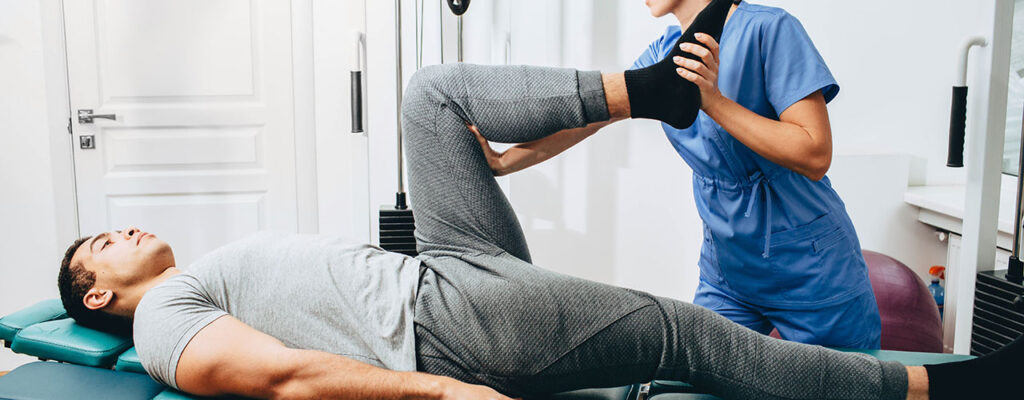
When treating a herniated disc (and, by extension, sciatica), our therapists will move through the following steps:
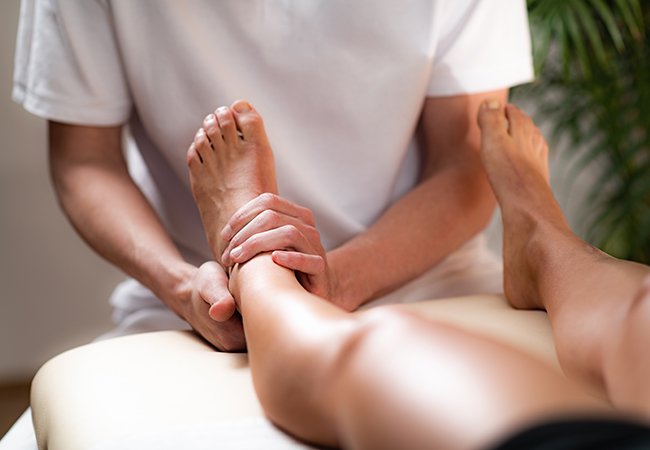
- Manage Pain: We’ll develop a plan to address your acute pain, pulling from several options. Gentle spinal mobilizations, soft tissue manipulation of your back muscles, and pain relieving modalities such as dry needling or hot and cold therapy can all help.
- Improve Mobility: Movement is crucial in addressing sciatica. Spinal mobilizations play an essential role here, allowing you to move the joint without exerting effort. We’ll also incorporate active stretches and mobility work to help ease range of motion restrictions and prepare your body for the next phase of treatment.
- Strengthen Your Back and Core: As your pain lessens, we’ll begin working to build strength in your core muscles, which stabilize and support your spine. By strengthening these muscles, you can alleviate the pressure on your lumbar spine that contributes to sciatic pain and a herniated disc.
- Educate to Prevent Future Pain: Finally, we can provide the tools to prevent a future bout of sciatica. We will help you develop a home exercise program to keep your spine healthy or show you how to properly lift heavy objects to avoid injury.
Find Sciatica Relief at Breckenridge Physical Therapy
Sciatic pain can be incredibly intense and often debilitating. Regular physical therapy will help you resolve that pain — and the underlying cause — so you can get back to living a full, healthy life.
To get started with your own personalized sciatica treatment plan, call to schedule an appointment today!
Patient
Success Story
“Tori was great getting us scheduled and following up plus super helpful in the office! Alex has done a great job helping me get moving better after bunion surgery and figuring out my weak areas to make me stronger!”
— Linda E.
Want to Ease Sciatic Pain?
GET MOVING!
While regular physical therapy at Breckenridge Physical Therapy is the best way to resolve your sciatica, several simple at-home exercises can help resolve your pain as you work through your treatment plan. Our physical therapists will usually provide you with a personalized routine for your PT “homework.” The following are common exercises we might suggest and may help relieve pain between sessions. But make sure to check with your therapist before giving them a try!
Simple Exercises to Ease Sciatic Pain
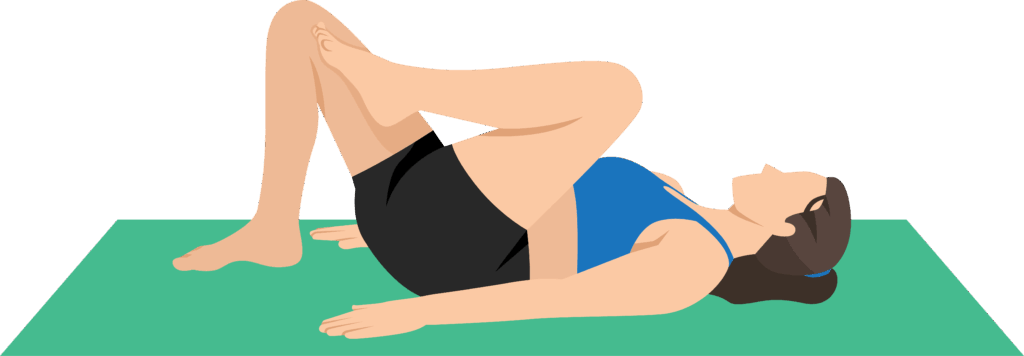
Supine Piriformis Stretch
- Lie on your back with your knees bent, pointed toward the ceiling.
- Rest the ankle of your affected leg against your other thigh, forming a “four” shape with your legs.
- Gently pull your crossed leg sideways across your body until you feel the stretch in your affected glute.
- Hold for 10-30 seconds and repeat on the other side if you wish!
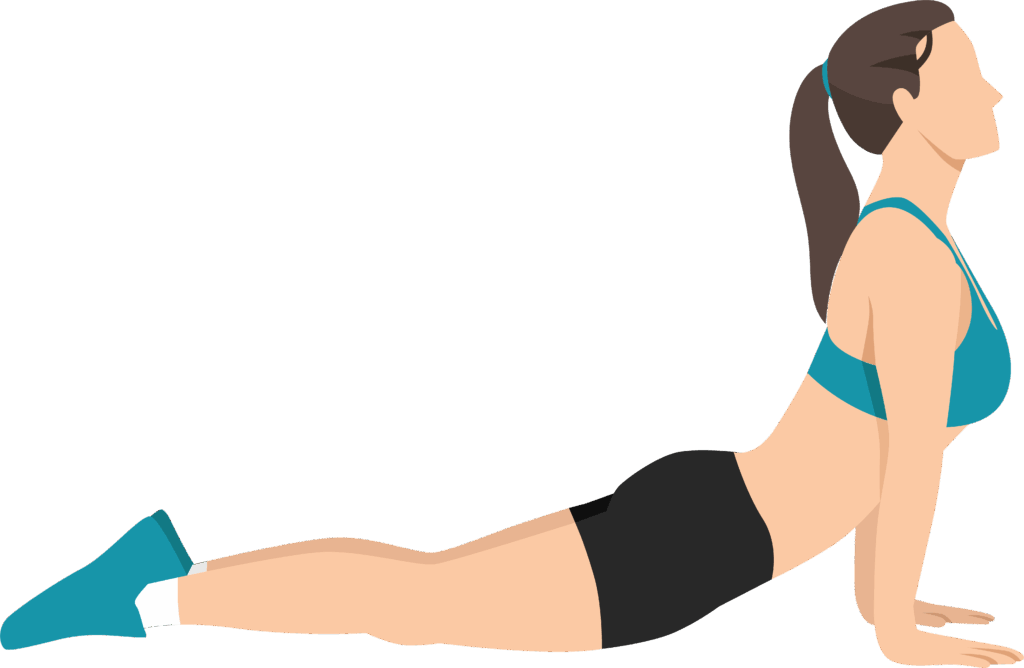
Cobra Stretch
- Lie down on your stomach with your hands on the floor in line with your shoulders and your elbows tucked into your body.
- Inhale and press into your palms to lift your head, chest, and shoulders off the ground. Don’t fully straighten your arms; make sure your chest stays lifted.
- Tighten your core muscles as you hold the stretch for 10-30 seconds.
- Gently lower back to the ground and repeat as needed.
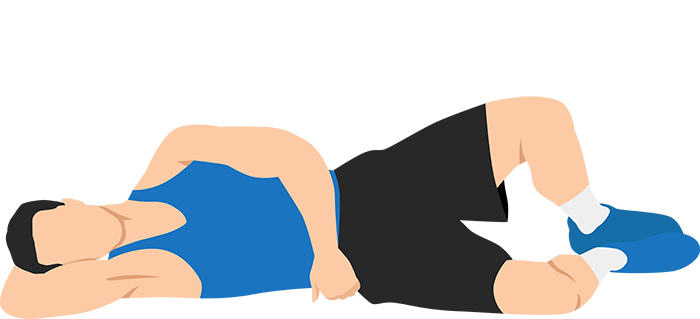
Clamshell
- Lie on one side with your knees slightly bent and your head resting on your bottom arm. You can press your top arm into the ground in front of you for support.
- Engage your core to help with stability.
- Keeping the feet together, gently lift your top knee so that your bent legs resemble the open mouth of a clam.
- Keep your torso still so you don’t roll backward.
- Hold for 5-10 seconds, then lower slowly. Complete as many clamshells as you’d like, but don’t forget to roll over and do the other side, too!

Feel Better by Eating Better!
Healthy Chicken Quesadillas
Ingredients:
- 2 tbsp low sodium chicken broth
- 1⁄4 cup onion, chopped
- 1 small garlic clove, minced
- 1⁄4 cup bell pepper, chopped
- 2 chili peppers, minced (to taste)
- 3 plum tomatoes, chopped
- 8 flour tortillas
- 1 cup low-fat cheddar cheese, shredded
- 1 1⁄2 cups cooked chicken, shredded
- scallion, cut on the bias (garnish)
- salsa (garnish)
- nonfat sour cream (garnish)
Directions:
In a medium-heavy skillet, saute the onions, garlic and peppers until soft in the 2 tablespoons chicken broth. Add the chili peppers and tomatoes and simmer for a few minutes more until the liquid has evaporated. Add the chicken and stir well to combine. Spray a cold skillet with the nonstick spray and heat over medium heat. Place a tortilla in the pan and sprinkle with 1/8 cup cheese. Add about a quarter of the chicken mixture and top with another 1/8 cup cheese. Cover with another tortilla and cook for two to three minutes or until golden brown. Flip the quesadilla over and cook for an additional two minutes. Remove from the heat and cut into edges. Keep warm while frying the remaining quesadillas. Serve with salsa, scallions, and fat-free sour cream.
Exercise of the Month
Seated Sciatic Nerve Tensioner
3 Sets, 10 Reps, 0 Hold
Sit in a chair with one foot flat on the ground and the foot on the side you want to work flexed with your toes pointing towards your face. Lift one lower leg by lightly contracting the upper thigh while simultaneously lowering your head, slowly tucking your chin towards your chest and exhaling. Slowly return to start.


Meet Our Team

Dr. Justin Welch
PT, DPT, C-PS

Dr. Ellie Allan
PT, DPT, C-PS

Dr. Alexander Kuck
PT, DPT, C-PS
Let’s Get You Better ASAP!
Don’t let pain dictate your life. Take the first step towards reclaiming your mobility and well-being with our expert support. Start your journey to a healthier you today.